

Transport
Getting Around Mauritius
Cars, scooters, taxis, buses and everything in between.
Car hire is by far the most popular and practical way to explore Mauritius at your own pace. Vehicles are widely available from international chains and local operators. We recommend comparing prices through RentalCars.com — you can often find significantly better rates than booking directly.
Mauritius drives on the LEFT. An international driving licence is accepted, though your home country licence is usually sufficient for EU, UK, US, Australian and most other nationalities.
Roads are generally in good condition on main routes. Traffic can be heavy around Port Louis, Ebène, Rose Hill, and Quatre Bornes during morning and evening rush hours (7–9am, 4–6pm). Allow extra time for these areas.
Scooters are a great way to explore the coastal roads and smaller villages, and significantly cheaper than car hire. Expect to pay MUR 500–800 per day.
You must hold a valid motorcycle licence from your home country. Helmets are mandatory by law — reputable hire companies will provide them.
Scooters are best suited to experienced riders. Traffic in town centres can be unpredictable and road surfaces vary. Not recommended for those without prior motorcycle experience.
Agree price first
Taxis & Rideshare
Uber launched in Mauritius and is now available across the island — download the app and book as you would anywhere else. Fares are metered and shown upfront, making it the most transparent option.
Traditional taxis do not use meters — always agree on a price before getting in. Ask your hotel concierge what a fair fare should be. Local apps Taxito and PickMe also offer fixed upfront pricing.
The airport has an official taxi desk outside arrivals with a fixed zone-based price list. Use this rather than accepting offers from unofficial drivers inside the terminal.
Cheap & authentic
Bus Network
Mauritius has an extensive national bus network covering virtually every part of the island. Journeys cost MUR 30–60 — making it the most affordable transport option by a wide margin.
Two main operators: CNT (Central Transport Authority) covers central and eastern routes; RHT (Rose Hill Transport) covers the west and north-west. Schedules and routes are available at mauritiusbus.com.
Most buses do not have air conditioning and can be crowded during peak hours. Journeys take longer than driving due to frequent stops, but the bus is a genuinely authentic way to experience local life.
The Metro Express is a modern light rail service connecting Port Louis to Curepipe via Rose Hill, Quatre Bornes, and several intermediate stops — 19 stations in total.
Trains are clean, air-conditioned, and run every 7–12 minutes during peak hours. Fares are MUR 50–80 per journey. It is the fastest way to travel the Port Louis–Curepipe corridor, completely bypassing road traffic.
The network is expanding — a northern extension towards the airport is planned. The Metro Express app has live schedules, route maps, and fare information.
SSR International Airport is located at Plaisance in the south-east. Journey times: Grand Baie (north) approx. 1 hour; Flic en Flac (west) approx. 45 minutes; Belle Mare (east) approx. 20 minutes.
Uber operates at the airport. The official taxi desk is outside arrivals with fixed zone pricing. Most hotels offer pre-booked transfers — more convenient than a taxi, especially late at night.
Shared shuttle services are available at lower cost than private transfers. Book in advance during peak season.
Affiliate Partner
Find the best car hire deal
Compare prices from all major car hire companies in Mauritius — Hertz, Avis, Budget, Europcar, and local operators — in one search. Pre-booking almost always beats desk prices at the airport.
Prices shown include all taxes and fees. Free cancellation on most bookings.
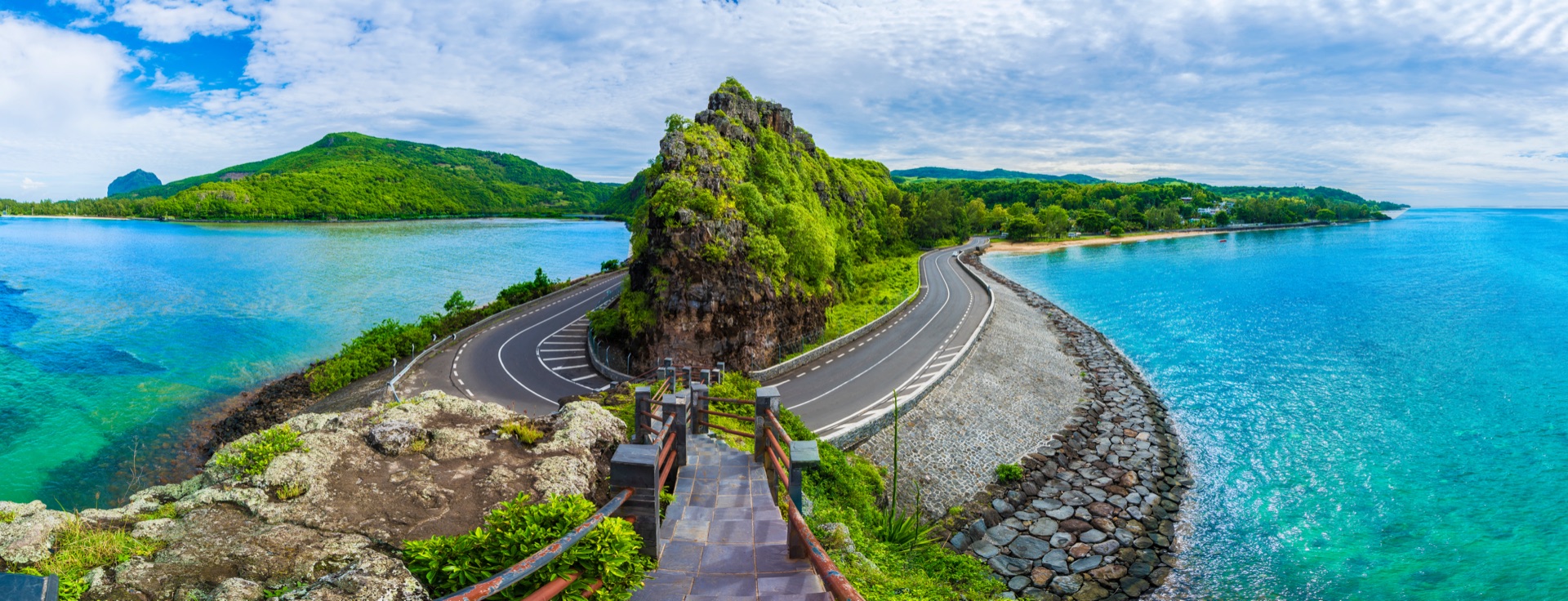
Driving in Mauritius
Things to know before you drive
Drive on the LEFT — the same as the UK, Australia, and South Africa
Speed limits: 40 km/h in built-up areas, 80 km/h on main roads. Limits are enforced by speed cameras.
Roundabouts are common — give way to traffic already on the roundabout
Beware of sugar cane lorries during harvest season (June–November). They are wide, slow, and take up much of the road on rural routes
Road quality varies significantly — potholes are common on smaller roads and in rural areas. Drive slowly on unfamiliar routes.
Petrol stations are widely available. Most accept credit cards. Petrol (essence) and diesel available everywhere.
Parking is free in most areas outside Port Louis. In the capital, use official car parks.
Own a transport or car hire business in Mauritius?
List it free →