
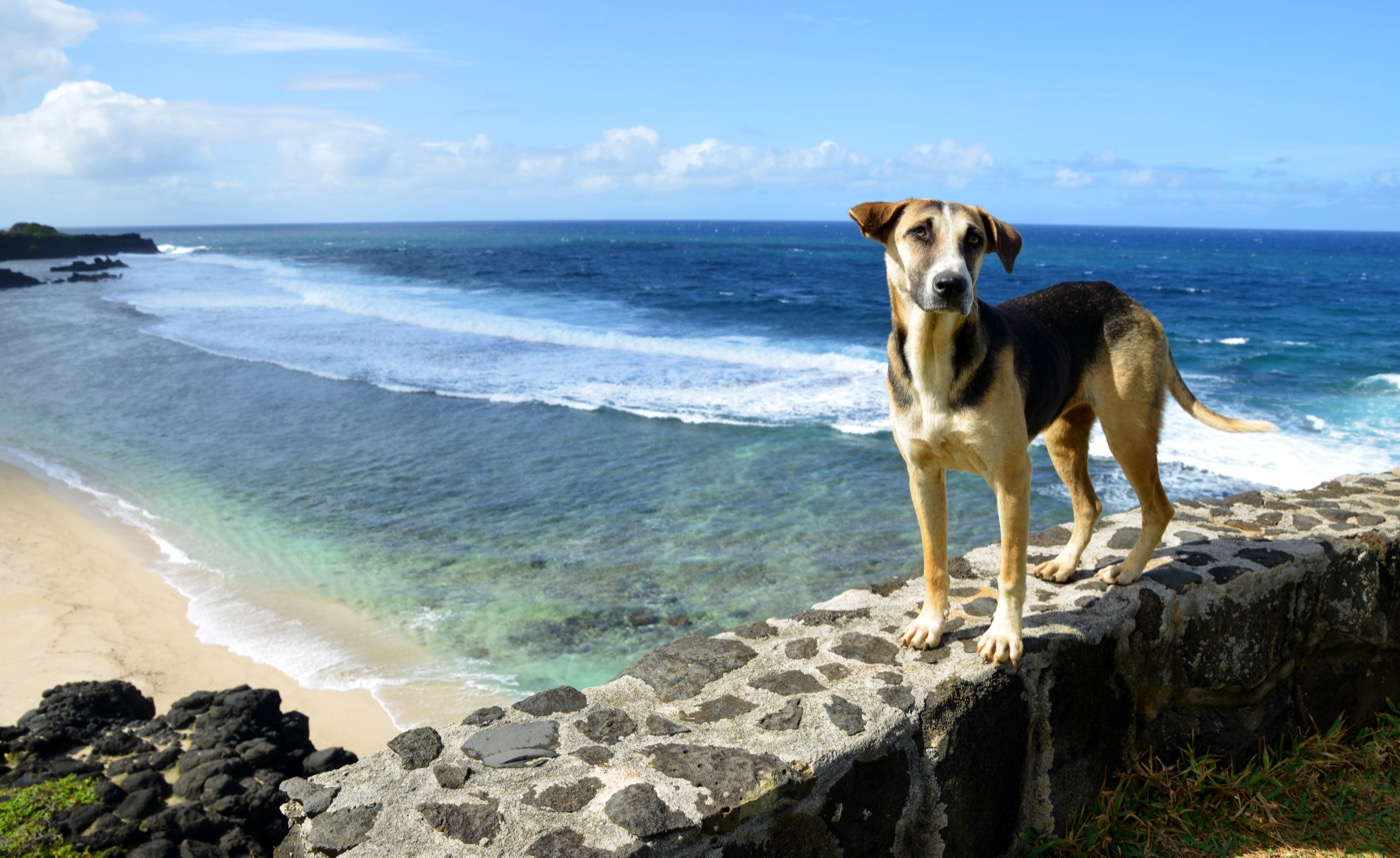
Stray Dogs in Mauritius
The reality of the stray dog situation, the remarkable charities working to change it, and how residents and visitors can help.
What you will see — and why
Mauritius is a paradise in many ways. But if you arrive expecting pristine streets and manicured parks, one aspect of island life may come as a genuine shock: the number of stray dogs. They are everywhere — on roadsides, on beaches, outside supermarkets, sleeping in the shade of roundabouts. In some areas of the island, particularly the south and rural interior, the numbers can feel overwhelming.
This is not a new problem, and it is not caused by neglect in the simple sense. It is the result of decades of insufficient neutering and sterilisation, cultural attitudes toward animals that differ from what many expats grew up with, economic pressures that make vet care inaccessible for much of the local population, and a government response that has historically been inadequate.
The stray population is estimated in the hundreds of thousands across the island. Many are not aggressive — Mauritius does not have a significant rabies problem and most strays have had limited negative human contact. But they are malnourished, injured, sick, and struggling. Many are mothers with litters, perpetuating the cycle.
It is difficult to witness. Many expats who move to Mauritius find themselves feeding the dogs near their home, taking injured animals to the vet, or eventually bringing one — or several — into their lives permanently. It changes you. And once you understand the scale of the problem, ignoring it becomes impossible.
The dogs themselves
The Mauritian stray — sometimes called the Potcake in the broader Caribbean and Indian Ocean context, though locally they are simply referred to as stray dogs or chien errant — is typically a mixed-breed animal of medium size, lean build, and remarkable resilience. They are intelligent, adaptable, and often surprisingly gentle with the humans who show them kindness.
Many strays in Mauritius have found their own semi-settled lives: a dog that sleeps outside a particular house, accepted by the family who feeds it but not formally adopted; a beach dog that the local restaurant feeds each evening; a market dog that the vendors look out for. These dogs exist in a grey zone — not truly wild, not domesticated, dependent on the goodwill of whoever happens to be near them.
What strikes most expats who engage with rescue dogs in Mauritius is how quickly they adapt to home life. Dogs that have spent their whole lives on the street, suspicious of humans, often transform within weeks of being in a loving home. Their capacity for trust and affection, after everything they have endured, is genuinely humbling.
What the rescue organisations do
The charities and rescue groups working in Mauritius do extraordinary work with almost no resources. They are run by passionate volunteers — mostly expats and a growing number of local Mauritians — who use their own time, money, and emotional reserves to rescue, rehabilitate, and rehome animals that the system has failed.
A typical rescue operation: a dog is spotted injured by the roadside and reported on social media. A volunteer collects it, takes it to a vet, pays the bill from their own pocket or from donation funds, nurses it back to health in their home, and then posts adoption photos and videos to find it a permanent family. This happens dozens of times each week across the island.
The longer-term solution — the only sustainable one — is mass neutering and sterilisation. Several organisations run dedicated spay/neuter programmes, often in partnership with international veterinary charities. Progress is slow but measurable. In communities where sustained neutering has been carried out over years, the stray population has visibly reduced.
International adoption has also become an important pathway. Dogs rescued in Mauritius have found permanent homes in France, the UK, Germany, South Africa, Australia, and elsewhere. The logistics are complex but manageable, and the charities have developed expertise in international health certificates, airline requirements, and import rules for dozens of countries.
Rescue organisations making a difference
Bruiser & Co
🐾 Rescue, rehabilitation, rehoming
One of the most active and well-known dog rescue organisations in Mauritius. Founded by passionate animal lovers, Bruiser & Co focuses on rescuing, rehabilitating, and rehoming stray and abandoned dogs across the island. They run adoption campaigns, fundraising events, and rely entirely on volunteers and donations. Their social media presence has built a strong community of supporters both locally and internationally.
MSPCA (Mauritius SPCA)
🐾 Shelter, veterinary care, legislation
The Mauritius Society for the Prevention of Cruelty to Animals is the island's longest-established animal welfare organisation. They run shelters, conduct rescue operations, provide veterinary care to animals in need, and campaign for stronger animal welfare legislation. The MSPCA also runs neutering and sterilisation programmes to help control the stray population humanely.
PAWS Mauritius
🐾 Foster network, adoption, rescue
PAWS (People for Animal Welfare Society) is a volunteer-run rescue group that rehabilitates injured and abandoned animals and works to find them permanent homes. They operate a foster network across the island, meaning rescued animals live in homes rather than kennels while waiting for adoption. They are particularly active on social media, sharing rescue stories and adoption posts.
Animal Rescue Mauritius
🐾 Emergency rescue, international rehoming
A grassroots rescue group run entirely by volunteers. They respond to reports of injured, sick, or abandoned animals across the island, provide emergency veterinary care, and coordinate rehoming both locally and internationally. They have successfully placed dogs with families in Europe, South Africa, and elsewhere.
Save Our Strays Mauritius
🐾 Neutering, sterilisation, population control
A charity focused on neutering and sterilisation programmes as the long-term solution to the stray population. They work with veterinary clinics to provide low-cost and free neutering, particularly in lower-income communities where pets are most likely to produce litters that end up on the streets.
Help Our Homeless Animals (HOHA)
🐾 Shelter, fostering, long-term care
A registered charity that runs a shelter in the south of the island, taking in strays, injured animals, and dogs surrendered by families who can no longer care for them. They rely entirely on donations for food, medical care, and shelter running costs, and always need foster families and long-term adopters.
This list is not exhaustive — there are many dedicated individuals and informal rescue networks operating across the island. Search Facebook for Mauritius animal rescue groups and you will find a thriving, passionate community.
How you can help
Adopt — give a dog a forever home
The most impactful thing you can do. All of the charities listed here have dogs waiting for permanent homes. Adoption from a rescue usually costs little to nothing — the charity simply wants the dog to go to a good home. Many expats arrive without a dog and leave with one they can't imagine life without.
Foster — a temporary home while they wait
Fostering is ideal if you're not sure about a permanent commitment, or if you're in Mauritius for a fixed period. A foster dog lives in your home, receives love and stability, and the charity continues to cover veterinary costs. Fostering frees up shelter space for more rescues and dramatically improves a dog's chances of finding a permanent home.
Donate — food, money, or supplies
Cash donations go directly to veterinary bills, food, and shelter costs. But in-kind donations are often just as welcome: dry dog food, blankets, crates, leads, and medical supplies. Check each charity's wishlist before donating goods.
Volunteer — time is always needed
Walking dogs, helping at fundraising events, driving animals to vet appointments, photographing dogs for adoption posts — every hour given makes a difference. Most charities are desperate for reliable volunteers who can commit to even a few hours a week.
Sponsor a shelter dog
Some organisations offer sponsorship schemes where a fixed monthly donation covers the food and care costs of a named dog. You receive updates and photos of your sponsored dog. A meaningful way to help if you can't adopt or foster.
Spread the word
Sharing adoption posts, fundraising campaigns, and rescue stories on social media costs nothing but makes an enormous difference. Many successful international adoptions started with a shared post. If you have a platform or network, use it.
A note from the Mauritius Life team
We have experienced this firsthand. Over the years of living on this island, we have taken in ten stray dogs — found them on the road, brought them home, given them veterinary care, and worked to find them families. Three have gone on to wonderful permanent homes with people we trust. One came to us very unwell, with cancer, and although her time with us was short, we gave her the best final chapter we possibly could — good food, warmth, love, and dignity. She deserved every moment of it. Six remain with us today.
We are not a rescue organisation. We have no special training or resources. We are just people who couldn't walk past a dog in need. That is all it takes. If you are moving to Mauritius, or even visiting, and you find yourself drawn to one of the dogs you see — trust that instinct. The rescue community on this island will support you every step of the way.
— The Mauritius Life team
Ready to help?
The best place to start is Facebook. Search for these groups:
What is a "forever home"?
In rescue circles, a "forever home" means a permanent, loving home for the rest of the dog's life. It is the opposite of a temporary foster or a trial arrangement. When a rescue says a dog is "looking for its forever home," they mean it needs someone who will commit to that animal no matter what — through illness, through moves, through life changes. Every dog deserves one.
Found an injured stray?
1. If safe to do so, confine the animal — use a towel or jacket
2. Post in a local rescue Facebook group with your location
3. Contact the MSPCA on their emergency line
4. Take photos clearly showing injuries
5. If the dog is in immediate danger, a vet will treat first and sort payment later
Moving to Mauritius with a pet?
Read our complete guide to importing dogs and cats — microchipping, titre tests, import permits, and timeline.
Pet import guide →More from Mauritius Life