
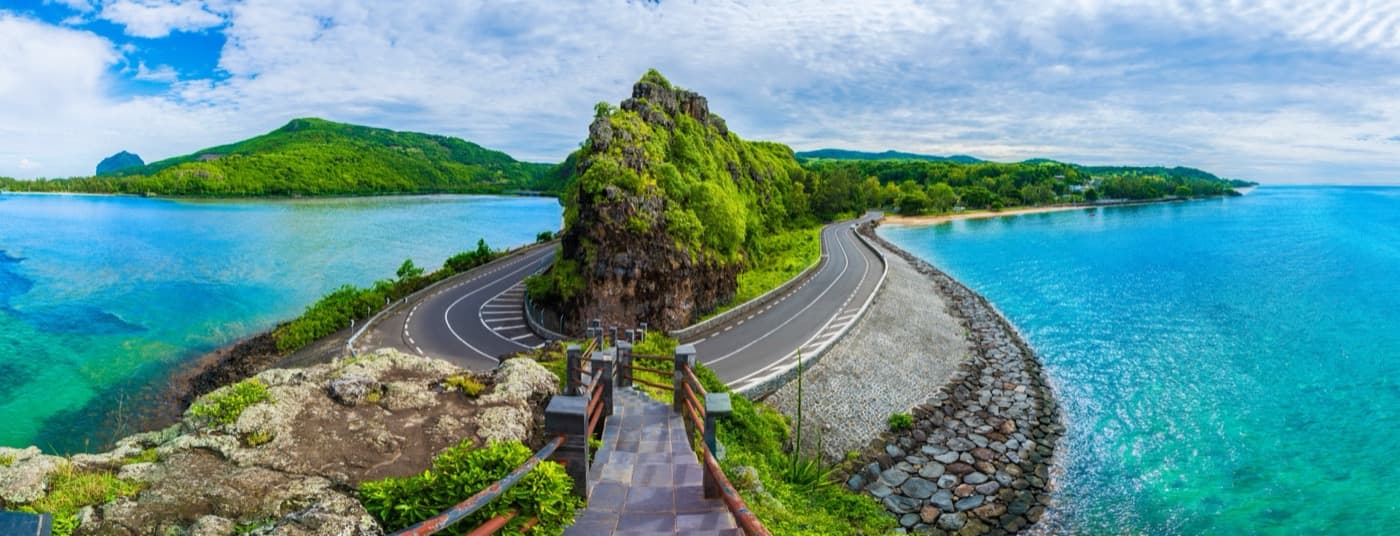
Renting a car in Mauritius is the single most effective decision you can make for your trip. Public transport covers the main corridors but leaves the south coast, the Black River Gorges, and the quieter east-coast stretches effectively out of reach. A rental gives you the island on your own schedule, early mornings at empty beaches, spontaneous detours through sugarcane fields, and the freedom to stay until the light is right.
Why Renting a Car in Mauritius Makes Sense
Mauritius is roughly 65 kilometres long and 45 kilometres wide. That sounds manageable, but the road network is dense, traffic around Port Louis peaks sharply during commute hours, and the most rewarding destinations, Chamarel, Le Morne, Mahébourg, the Rodrigues ferry terminal at Pointe Jerome, are not well served by buses alone.
Taxis are available and reliable, but costs accumulate quickly if you plan multiple excursions. A mauritius rentacar arrangement, booked for five to seven days, typically costs less than three or four one-way taxi journeys to the south.
Who Benefits Most from a Rental
- Families who need flexibility around meal and nap times
- Couples planning a coastal road trip rather than a resort-only stay
- Expats and professionals relocating to the island who need to explore neighbourhoods before committing to a lease
- Remote workers based on the island for 60-plus days under the Premium Visa scheme
What to Know Before You Book
Driving Side and Licence Requirements
Mauritius drives on the left, a legacy of British administration that surprises visitors from continental Europe and North America. Steering wheels are on the right. Most rental companies accept a valid national driving licence from your home country for stays under one year. An International Driving Permit is recommended but rarely required in practice.
You must be at least 21 years old, and some companies set the minimum at 23 for larger vehicles. A credit card is standard for the security deposit.
Choosing the Right Vehicle
The road to Chamarel and the descent to the Blue Bay Marine Park both involve steep gradients and tight bends. A compact hatchback handles them without difficulty. Four-wheel drive is unnecessary for standard tourist routes but worth considering if you plan to access the Bras d'Eau forest tracks in the north-east or any off-road trails.
For families, a mid-size SUV offers boot space for beach gear and comfortable headroom on longer drives. Air conditioning is non-negotiable, even in the cooler months of June to September, midday temperatures inside a parked car climb fast.
Fuel, Roads, and Parking
Fuel stations are well distributed across the island. Most rentals run on petrol; diesel options exist but are less common in the compact segment. Fill up before heading into the Black River Gorges or the far south, stations thin out noticeably once you leave the main ring road.
Parking in Grand Baie and Flic en Flac can be tight on weekends. Central Port Louis has paid parking near the waterfront and the Caudan Arcade. Elsewhere, roadside parking is generally free and straightforward.
Costs and What Affects Them
Entry-level hatchbacks start from around MUR 1,200 to MUR 1,800 per day depending on season and supplier. Mid-size SUVs range from MUR 2,500 to MUR 3,500. Rates drop meaningfully for rentals of seven days or more.
Insurance is the variable that catches visitors off guard. Basic third-party cover is included by law, but collision damage waiver (CDW) and theft protection are usually add-ons. Read the excess clause carefully, some budget operators carry excesses of MUR 50,000 or more.
Book directly with a reputable local operator or through an established aggregator. Confirm that the vehicle has a current roadworthiness certificate (the local equivalent of an MOT) and that the spare tyre is in good condition.
Managing Payments: Internet Banking in Mauritius
If you are staying in Mauritius for an extended period, whether for work, relocation, or the Premium Visa, you will need a local bank account to manage rental deposits, utility bills, and day-to-day expenses efficiently.
MCB (Mauritius Commercial Bank) is the island's largest retail bank and offers a full internet banking platform. Internet banking MCB Mauritius allows account holders to transfer funds, pay bills, top up mobile credit, and manage foreign currency accounts entirely online. The MCB Juice mobile app extends most of these functions to smartphones and is widely used by both residents and long-term visitors.
Internet banking Mauritius Commercial Bank services are accessible 24 hours a day and support multi-currency accounts, which is practical for expats receiving salaries in euros, sterling, or US dollars. Setting up an account typically requires proof of address, a valid passport, and, for non-citizens, a copy of your visa or work permit.
Other banks with strong digital platforms include SBM Bank and AfrAsia Bank, the latter being particularly popular with internationally mobile professionals.
Mauritius for Professionals: Job and Career Opportunities
For those considering a longer stay, job opportunities in Mauritius have expanded considerably over the past decade. The island has positioned itself as a regional hub for financial services, business process outsourcing, ICT, and increasingly, the blue economy.
Career opportunities in Mauritius tend to cluster in:
- Financial services, fund administration, private banking, compliance, and audit
- ICT and fintech, software development, cybersecurity, and digital payments
- Hospitality management, senior operational roles in the hotel sector
- Education, international schools serving the expat community
- Renewable energy, a growing sector as the government targets 60% renewable generation by 2030
Jobs in Mauritius are advertised through the Mauritius Revenue Authority's employer portal, the MyJob.mu platform (a primary aggregator for job mu mauritius searches), and LinkedIn, where most multinational firms operating on the island maintain active pages.
Mauritius job opportunities for non-citizens require an Occupation Permit, which combines a work and residence permit into a single document. Processing typically takes four to six weeks. The Premium Visa, by contrast, is designed for remote workers and does not require local employment, it is valid for up to one year and renewable.
Salaries vary significantly by sector. Financial services and senior ICT roles are competitive by regional standards. Cost of living, particularly housing in the popular expatriate corridors of Tamarin, Balaclava, and Pereybere, has risen sharply since 2021, so salary benchmarking against current rental and schooling costs is essential before accepting an offer.
Practical Tips for Driving in Mauritius
- Use Google Maps offline. Mobile data can be patchy in the Gorges and along the south-west coastal road.
- Avoid Port Louis between 07:30–09:00 and 16:30–18:30. The ring road backs up significantly, and there are no useful alternatives.
- Speed cameras are active on the motorway between the airport and Port Louis. The limit is 110 km/h on the motorway, 80 km/h on secondary roads, and 50 km/h in built-up areas.
- Road signage is in English and French. Distance markers use kilometres.
- Pedestrians and cyclists share the road on the coastal strips, particularly around Grand Baie and Mahébourg market days.
The Routes Worth the Drive
The south coast road from Mahébourg through Souillac to Le Morne is the island's most varied stretch, cliff views, the Rochester Falls detour, and the dramatic basalt coastline near Gris Gris. Allow a full day.
The drive from Curepipe up through Vacoas and into the Black River Gorges National Park takes under an hour from the centre of the island but feels entirely removed from the resort coast. The viewpoints over the Gorges are accessible by standard road car.
The north, Grand Baie, Cap Malheureux, the offshore islands visible from the coast near Coin de Mire, is best done early before the beach traffic builds. The road is flat, fast, and forgiving.
FAQ
(See structured FAQ section below)