
Water Activities in Mauritius: Everything You Need to Know
Mauritius offers some of the most varied water activities in the Indian Ocean, reef-protected lagoons on the east and west coasts, open-water swells in the south, and a network of dive sites that reward beginners and experienced divers equally. Whether you are planning a two-week holiday or weighing up a longer stay on the island, the water is the clearest reason to be here.
The Best Water Activities in Mauritius by Type
Snorkelling and Reef Exploration
The fringing coral reef that encircles most of Mauritius creates calm, shallow lagoons ideal for snorkelling. Blue Bay Marine Park in the south-east is the most protected site on the island, a designated Ramsar wetland with hard coral formations, sea turtles, and reef fish in water rarely deeper than six metres. Trou d'Eau Douce on the east coast is the departure point for snorkelling excursions to Île aux Cerfs, where the lagoon floor is white sand and visibility regularly exceeds fifteen metres.
What to bring: reef-safe sunscreen, a rash vest, and water shoes if you plan to wade from the shore.
Scuba Diving
Mauritius has over forty named dive sites. The most visited include:
- Shark Point (Flic en Flac): A wall dive on the west coast where white-tip reef sharks rest on the sandy bottom at around twenty-five metres.
- Cathedral (Flic en Flac): A cavern system with natural light shafts, one of the most photographed dive sites in the Indian Ocean.
- Stella Maru (south coast): A deliberately sunk wreck that now hosts lionfish, moray eels, and glassfish clouds.
- Coin de Mire (north): A rocky islet with strong currents and pelagic species including barracuda and trevally.
Dive centres are concentrated around Grand Baie in the north, Flic en Flac on the west coast, and Blue Bay in the south-east. PADI open-water courses typically run three to four days and cost between €300 and €450 depending on the operator.
Kitesurfing and Windsurfing
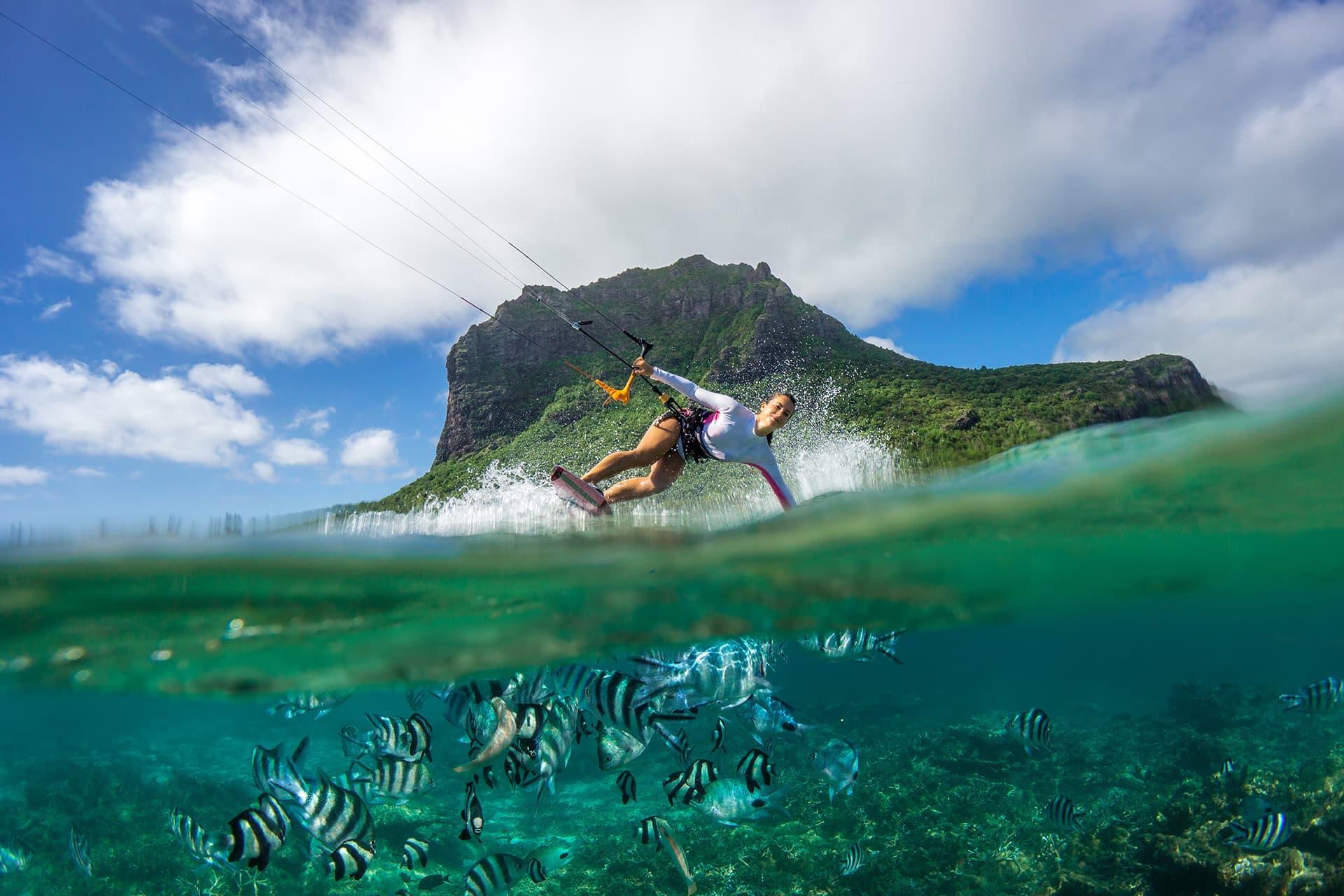
Le Morne on the south-west peninsula is one of the most respected kitesurfing destinations in the world. The trade winds blow consistently from May to November, and the shallow lagoon inside the reef provides a forgiving learning environment. Le Morne also hosts international kitesurfing competitions, and several schools offer courses for all levels.
On the east coast, Anse la Raie and Pointe d'Esny are quieter options with steadier winds and less crowd pressure.
Stand-Up Paddleboarding (SUP)
SUP is widely available at beach hotels and independent rental operators across the island. The calmer morning conditions, before the trade wind picks up, make early starts worthwhile. The lagoon at Grand Baie and the sheltered bay at Tamarin on the west coast are both well-suited to flat-water paddling.
Deep-Sea Fishing
Mauritius sits on the edge of a submarine plateau that drops sharply into deep ocean, conditions that concentrate large pelagic fish close to shore. The season for blue marlin runs from November to April. Yellow-fin tuna, wahoo, and dorado are caught year-round. Most deep-sea fishing charters depart from Black River in the south-west, with half-day and full-day options available. Catch-and-release is increasingly common and encouraged by reputable operators.
Sea Kayaking and Glass-Bottom Boat Tours
For those who prefer to stay on the surface, glass-bottom boat tours operate from most coastal resort areas and give a clear view of the reef without getting wet. Sea kayaking is available as a guided excursion or independent rental; the coastline between Mahébourg and Blue Bay rewards a half-day paddle with mangrove channels and open lagoon in equal measure.
Submarine and Undersea Walker Experiences
For visitors who want to see the reef without diving, Blue Safari Submarine operates a genuine tourist submarine out of Grand Baie, descending to around thirty-five metres. Undersea walker helmeted experiences, where participants walk on the seabed with an air supply overhead, are offered at several north coast operators and require no swimming ability.
Planning Your Time on the Water
Best season: May to November for wind sports; November to April for big-game fishing and calmer lagoon conditions on the east coast. Diving is good year-round, with the clearest visibility typically from April to November.
East vs west coast: The east coast lagoon is the quietest argument for staying longer than you planned, reef-protected, impossibly clear, and lined with resorts that have quietly set the standard for Indian Ocean hospitality. The south is different: wilder, less visited, and worth every kilometre of the drive. Between the two lies most of what makes Mauritius hard to leave.
Safety: Always check the flag system at public beaches. Red flags indicate dangerous conditions and swimming is prohibited. Jellyfish blooms occur occasionally on the east coast between July and September.
Living in Mauritius: What Supports a Life on the Water
For those considering a longer stay or relocation, Mauritius offers a practical infrastructure alongside its natural advantages.
Banking and Financial Services
Day-to-day banking is straightforward. Mauritius Commercial Bank (MCB) is the island's largest retail bank and its internet banking platform, accessible at mcb.mu, covers transfers, bill payments, and account management. Internet banking with Mauritius Commercial Bank is widely used by both residents and businesses, and the MCB app is rated reliably for mobile transactions. Other major banks including SBM and Barclays Mauritius also offer full internet banking services in Mauritius, making financial management accessible whether you are on the island full-time or splitting your year between countries.
Job Opportunities in Mauritius
Mauritius has developed a services-led economy with genuine career opportunities across several sectors. The financial services industry, funds, insurance, and global business companies, is the most established employer of internationally mobile professionals. The ICT and business process outsourcing (BPO) sector has grown steadily and now employs tens of thousands of people on the island.
Job opportunities in Mauritius for foreign nationals are most accessible in roles where local skills are in short supply: software development, financial compliance, hospitality management, and marine industries including diving instruction and boat operations. The government's Occupation Permit system allows foreign workers to apply for a combined work and residence permit, valid for up to three years and renewable.
For those searching for jobs in Mauritius, the main local platforms include MyJob.mu and LinkedIn, where Mauritian employers post regularly. The hospitality sector, directly linked to the island's water tourism industry, recruits internationally for senior management and specialist roles.
Career opportunities in Mauritius are also expanding in the blue economy: marine conservation, sustainable aquaculture, and ocean research are areas where the government has signalled investment intent through its national development frameworks.