
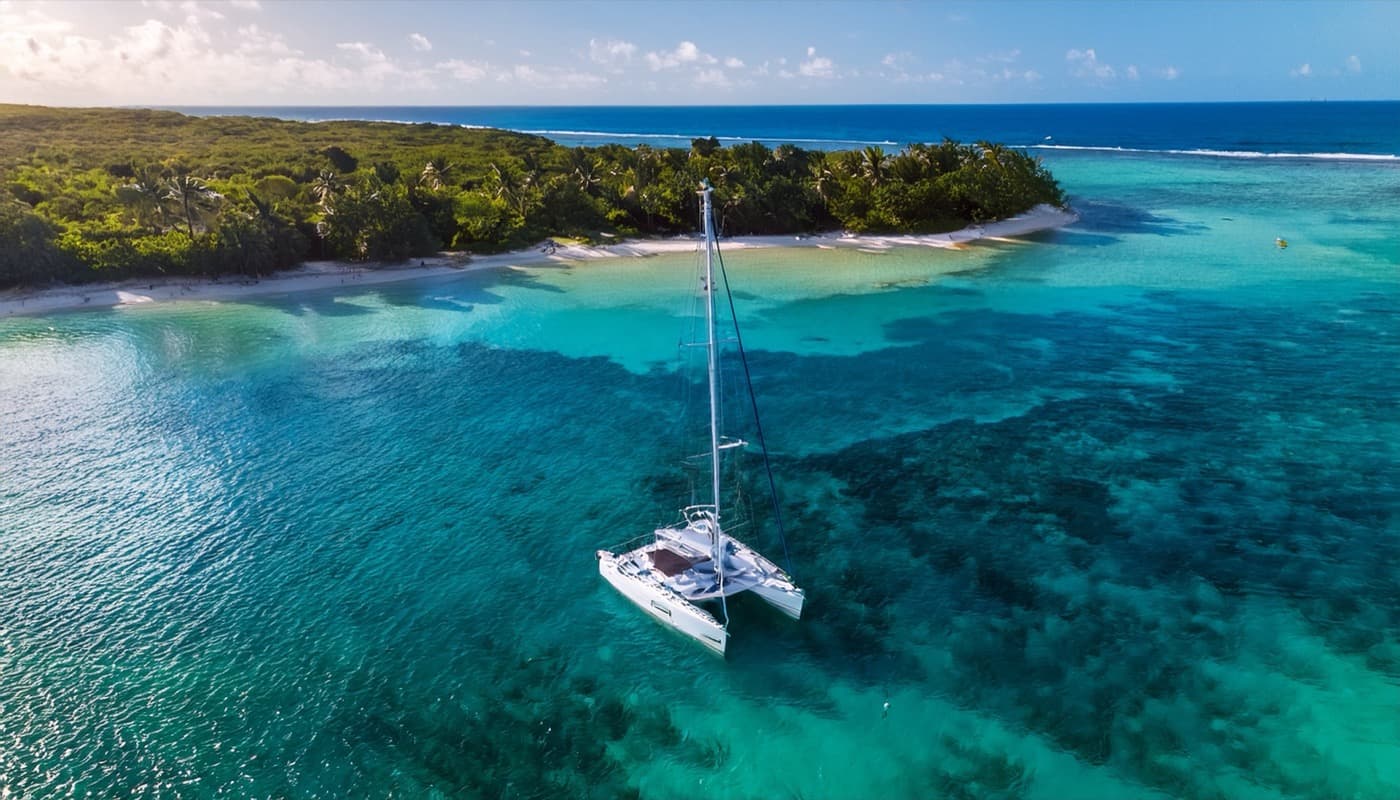
Mauritius rewards the visitor who looks beyond the beach. The island packs coral lagoons, volcanic highlands, multicultural cities, a growing professional economy, and one of the Indian Ocean's most accessible banking systems into 2,040 square kilometres. Whether you are planning a two-week holiday or weighing a long-term relocation, knowing what to do in Mauritius, and how the island actually works, is the difference between a surface-level trip and a genuinely informed decision.
What to Do in Mauritius: The Essential Experiences
Explore the Coast, But Choose Your Side
The east coast lagoon is the quietest argument for staying longer than you planned, reef-protected, impossibly clear, and lined with resorts that have quietly set the standard for Indian Ocean hospitality. The south is different: wilder, less visited, and worth every kilometre of the drive. Between the two lies most of what makes Mauritius hard to leave.
- East coast (Belle Mare, Trou d'Eau Douce): Calm water, kite-surfing, catamaran day trips to Île aux Cerfs.
- South coast (Souillac, Gris Gris): Dramatic cliffs, strong surf, the Rochester Falls inland.
- West coast (Flic en Flac, Le Morne): Sunset-facing beaches, world-record kite-surfing conditions at Le Morne Brabant, a UNESCO World Heritage Site.
- North (Grand Baie, Cap Malheureux): The island's social hub; restaurants, boutiques, and the postcard view of Coin de Mire islet offshore.
Go Inland
The interior is where most short-stay visitors never arrive, and where Mauritius reveals a different character entirely.
- Black River Gorges National Park covers nearly 6,700 hectares of native forest. Trails range from a one-hour loop to a full-day traverse. The park protects the Mauritian flying fox, the echo parakeet, and the pink pigeon, species found nowhere else on earth.
- Chamarel offers the famous Seven Coloured Earths (volcanic soil in distinct mineral bands) and one of the island's most respected rum distilleries.
- Curepipe and the Central Plateau sit at altitude, cooler and greener than the coast, with the Trou aux Cerfs dormant volcanic crater at the town's edge.
Engage With the Culture
Mauritius is Creole, Indian, Chinese, and French, simultaneously and without contradiction. Port Louis, the capital, holds all of it in a compact, walkable area.
- The Central Market in Port Louis is the island's best sensory introduction: spices, street food, textiles, and the particular noise of a city that runs on trade.
- The Aapravasi Ghat UNESCO World Heritage Site marks the arrival point of indentured labourers from India in the 19th century, a significant and sobering piece of global history.
- Mahebourg Waterfront in the south-east is quieter, with a good historical museum covering the 1810 Battle of Grand Port between British and French fleets.
Job Opportunities in Mauritius: What the Market Looks Like
Mauritius has positioned itself as a regional business hub for Africa and the Indian Ocean. Career opportunities in Mauritius span financial services, ICT, tourism, business process outsourcing (BPO), and a growing life sciences sector. The government's Economic Development Board actively promotes foreign investment, and the island's time zone (UTC+4) makes it operationally convenient for companies bridging European and Asian markets.
Where to Find Jobs in Mauritius
For professionals researching job opportunities in Mauritius, the primary channels are:
- MyJob.mu, the dominant local job board, aggregating roles across sectors and listing both local and expatriate-facing positions.
- LinkedIn, increasingly used by multinationals with Mauritius offices, particularly in fintech, audit, and legal services.
- Recruitment agencies, firms such as Rogers Capital Talent Solutions and Alentaris place mid-to-senior candidates across financial services and ICT.
- The Economic Development Board (EDB), publishes sector-specific workforce data and maintains a register of licensed Global Business Companies that are frequent employers.
Key Sectors Hiring in Mauritius
| Sector | Notes |
|---|---|
| Financial services | Banking, fund administration, insurance, largest formal employer after government |
| ICT & BPO | Strong government incentives; major players include Accenture, Ceridian, and local firms |
| Tourism & hospitality | Seasonal and permanent roles; management positions often require prior island experience |
| Construction & real estate | Driven by the Integrated Resort Scheme (IRS) and Smart City developments |
| Life sciences & medical devices | Emerging sector with specific government incentives |
Mauritius job opportunities are competitive at senior levels. Professionals relocating should verify work permit requirements through the Economic Development Board; the Occupation Permit combines work and residence rights into a single document, valid for up to ten years for qualifying investors, professionals, and self-employed individuals.
Banking in Mauritius: Managing Your Finances on the Island
MCB: Mauritius Commercial Bank
The Mauritius Commercial Bank (MCB) is the island's largest commercial bank by assets and the most widely used by both residents and expatriates. Founded in 1838, MCB operates across Mauritius and has a presence in several African markets. For anyone living or working on the island, MCB is typically the first banking relationship they establish.
Internet Banking at MCB Mauritius
Internet banking at MCB Mauritius is handled through the MCB Juice platform, a mobile-first system that also operates as a full online banking portal. MCB Juice allows account holders to:
- Transfer funds locally and internationally
- Pay utility bills and government fees
- Manage fixed deposits and savings accounts
- View statements and set transaction alerts
- Access foreign currency services
To register for internet banking with Mauritius Commercial Bank, existing account holders visit the MCB website or download the MCB Juice app, then complete identity verification using their national ID or passport. Registration can also be initiated at any MCB branch.
For expatriates unfamiliar with local banking, MCB offers dedicated international client services, and the internet banking interface is available in English. The bank's network of ATMs covers all major towns and resort areas, making day-to-day access straightforward even during the initial settlement period.
Other Banks Worth Knowing
While MCB is the most prominent, Mauritius has a well-regulated banking sector supervised by the Bank of Mauritius. Other established institutions include:
- SBM (State Bank of Mauritius), strong retail network, competitive on home loans
- AfrAsia Bank, private banking and wealth management focus, popular with high-net-worth residents
- HSBC Mauritius, preferred by multinationals for corporate accounts and international transfers
- Absa Bank Mauritius, active in trade finance and African corridor banking
Practical Notes for Visitors and Residents
- Getting around: Car hire is the most practical option outside Port Louis. Roads are generally well-maintained; driving is on the left.
- Language: English is the official language of business and government. Mauritian Creole is the everyday tongue; French is widely spoken in commerce and hospitality.
- Climate: The island has a warm season (November–April, with cyclone risk December–March) and a cooler, drier season (May–October). The south and east receive more rainfall year-round.
- Healthcare: Both public and private healthcare are available. Expatriates typically use private clinics; Wellkin Hospital in Moka and Fortis Darné in Floréal are the main private facilities.
- Cost of living: Lower than Western Europe or Singapore for housing and domestic services; imported goods and private schooling are relatively expensive.
Mauritius is an island that functions as well as it looks. The infrastructure, the banking system, the job market, and the quality of daily life are all reasons people arrive for a holiday and begin asking different questions by the end of the first week.