
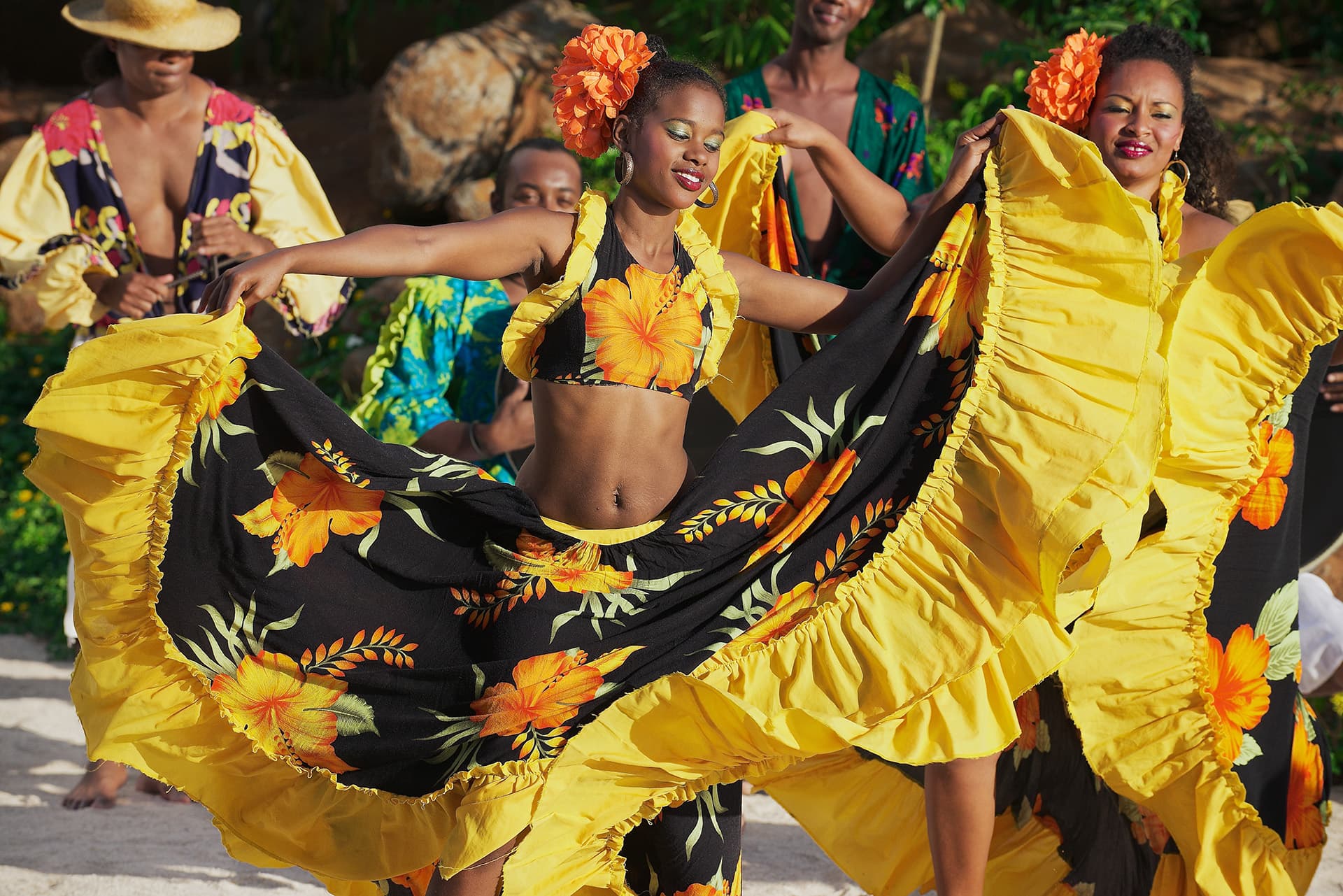
Mauritius People and Culture: What Actually Shapes Life on the Island
Mauritius is one of the most ethnically layered societies in the Indian Ocean, a place where Creole, Indo-Mauritian, Sino-Mauritian, and Franco-Mauritian communities have lived alongside each other for centuries, producing a culture that is neither purely African, nor Asian, nor European, but a coherent blend of all three. For visitors, that means a richer experience than most islands offer. For those considering a longer stay or relocation, it means a social environment that is genuinely cosmopolitan, tolerant by both law and habit, and far easier to integrate into than its small size might suggest.
Who Are the People of Mauritius?
The population of Mauritius sits at roughly 1.3 million. Indo-Mauritians, descendants of Indian indentured labourers brought by the British in the 19th century, form the largest group, around 68% of the population. Creoles, of mixed African and Malagasy heritage, make up approximately 27%. Sino-Mauritians and Franco-Mauritians account for the remainder, but their cultural and economic influence is disproportionate to their numbers.
This demographic mix is not merely statistical. It is visible in the architecture of Port Louis, in the calendar of public holidays (which covers Hindu, Muslim, Christian, and Chinese festivals), in the food markets, and in the ease with which most Mauritians move between cultural registers depending on who they are talking to.
Languages Spoken in Mauritius
Mauritius has no single official spoken language in daily life, though English is the language of government and law, and French is the language of business, media, and educated conversation. The mother tongue of most Mauritians is Mauritian Creole, a French-based creole with significant Malagasy, Bhojpuri, and English influence. Bhojpuri, a dialect of Hindi, is still spoken in rural Indo-Mauritian communities. Mandarin and Hakka survive among older Sino-Mauritian families.
For internationally mobile professionals, the practical implication is significant: English is sufficient for work and administration, French opens social doors quickly, and even a few words of Creole earn immediate goodwill.
The Cultural Calendar: Festivals as a Window into Mauritius Life
The density of festivals in Mauritius is one of the most immediate ways to understand the society. The country observes more public holidays than almost any other nation, roughly 15 per year, and most of them mark religious or cultural events from different traditions.
- Diwali, the Hindu festival of lights, sees the entire island lit with oil lamps in October or November.
- Eid ul-Fitr marks the end of Ramadan and is observed by the Muslim community with public prayers and family gatherings.
- Chinese Spring Festival brings dragon dances and red lanterns to the streets of Port Louis's Chinatown.
- Christmas and Easter are celebrated with the same seriousness as in any Catholic country, with midnight masses and family meals that can stretch across an entire day.
What is notable is not just the variety but the cross-community participation. Mauritians of different backgrounds attend each other's festivals with a casualness that reflects genuine social integration rather than performative tolerance.
Food as Cultural Identity
Mauritian cuisine is one of the most direct expressions of the island's cultural complexity. A typical day of eating might move from a Creole rougaille (a tomato-based sauce served with fish or sausage) at lunch, to a Tamil dholl puri (a flatbread filled with yellow split peas) from a street vendor, to a Chinese mine frite (fried noodles) for dinner, all within a few kilometres of each other.
The Indian influence is strongest in everyday cooking: curries, briyani, halim, and achards (spiced pickled vegetables) appear on most family tables. The French legacy shows up in the quality of bread, the prevalence of pâtisseries, and a genuine culture of sitting down to eat properly. The Creole contribution is in the spicing, bolder, more direct, less restrained than the Franco-Mauritian register.
For anyone considering Mauritius life long-term, food is rarely a point of friction. The range is wide, the quality is high, and cooking at home is easy given the availability of fresh produce, spices, and imported goods.
Social Norms and Daily Life in Mauritius
Mauritius is a formal society in certain respects, greetings matter, elders are addressed with respect, and dress standards in religious sites are observed without exception. At the same time, it is relaxed in the ways that matter most to people relocating from high-pressure urban environments: the pace is slower, the commute is manageable, and the default social register is warm rather than guarded.
Family is central. Multi-generational households remain common, and the social calendar revolves around family events, weddings, religious ceremonies, Sunday lunches, rather than professional networking or nightlife. This is one of the Mauritius life benefits that relocators consistently mention: a built-in social rhythm that is human-scaled.
Crime rates are low by regional and global standards. The rule of law is stable. The healthcare system, while not without its pressures, includes both a functioning public sector and a growing private sector used widely by expatriates.
Mauritius Life for Relocators: What the Culture Means in Practice
For internationally mobile professionals and families, understanding Mauritius people and culture is not just background knowledge, it directly affects the quality of daily life. A few practical observations:
Integration is genuinely possible. Unlike some island destinations where expatriates live in a parallel social world, Mauritius has enough cultural surface area, schools, sports clubs, neighbourhood associations, religious institutions, that newcomers can find their footing without retreating into an expat bubble.
Children adapt quickly. The bilingual (English/French) education system, combined with a school culture that reflects the island's diversity, means that children from international backgrounds typically integrate within a single academic year.
Business culture is relationship-driven. Trust is built through personal connection before professional transaction. This is worth knowing early: the Mauritius life guide that skips this point leaves relocators unprepared for how long the first phase of any business relationship actually takes.
Compared to alternatives, Mauritius offers a combination of political stability, legal transparency (English common law tradition), cultural richness, and physical beauty that is difficult to replicate in other Indian Ocean or African jurisdictions. The Mauritius life vs alternatives question, whether compared to Dubai, Singapore, or other Indian Ocean islands, almost always resolves in Mauritius's favour for families prioritising quality of life over scale.
A Mauritius Life Checklist: Cultural Preparation
Before arriving for an extended stay, it is worth working through the following:
- Learn basic Creole greetings. Bonzour (good morning), mersi (thank you), ki manyer (how are you), small gestures with outsized social returns.
- Understand the religious calendar. Know which festivals fall during your first months. Some services and shops close; others become more vibrant.
- Identify your neighbourhood's character. Grand Baie is cosmopolitan and fast-moving. Tamarin and Black River are quieter, more family-oriented. Floréal and Curepipe are cooler, more urban, more Mauritian in the everyday sense.
- Build relationships before you need them. The administrative and professional networks that matter most in Mauritius are personal ones.
- Engage with local food culture from day one. The street food circuit alone, dholl puri, gato pima, alouda, is a reliable way to start conversations and signal genuine interest in the place.
Why Mauritius People and Culture Matter to Your Decision
The practical case for Mauritius, the tax framework, the climate, the connectivity, is well documented. What is less often articulated is the cultural case: that this is a society with genuine warmth, deep roots, and the kind of social complexity that makes long-term life interesting rather than monotonous. The people of Mauritius have been navigating difference for three centuries. They are, as a result, unusually good at it.